If you're having trouble viewing this email, you cansee it online.
KAIMH Connections
Resources for Early Childhood Mental Health Advocates
Updates | December 2025
Read below for updates on KAIMH Conference 2026, research on screen time with infants & toddlers, sensory materials and social emotional development, a note from our Race & Social Justice committee, upcoming professional development and more!
Congratulations to Our Newest Endorsee!
Monique Mason, IMH-E®
Monique says, "Earning my KAIMH Infant Family Specialist Endorsement is important because it shows my dedication to the families and children I serve. I have served as a preschool teacher for 5 years now, 3 of them being in a therapeutic setting focusing on social and emotional skills. I love creating relationships with families and seeing the children in my program grow. Advocating for children’s mental health is a huge part of my why and what I do."
Endorsement Scholarships
KAIMH Conference Save the Date
April 23-24, 2026 in Wichita, Kansas
Join us for Conference 2026: RESILIENCE: Building Children’s Capacity to Bounce Back with keynote speaker, Nicki Patton Rowe, presenting both days:
Part 1: Rooted in Brain Architecture explores what resilience is, how it develops, and why it depends on the integration of the emotional and thinking systems of the brain. Part 2: Shaped by Experiences and Built Through Relationships focuses on practical, evidence-based strategies that strengthen self-regulation, executive function, and co-regulation—the key building blocks of resilience.
Registration and scholarship information coming soon!
If you are interested in presenting a breakout session or hosting an exhibitor table, please check out the article below or reach out to marie@kaimh.org with questions.
Call for Breakout Presentations
KAIMH invites infant and early childhood mental health advocates and professionals to submit proposals for breakout sessions at our 2026 Annual Conference, April 23-24 in Wichita, Kansas. This year’s theme, “RESILIENCE: Building Children’s Capacity to Bounce Back” with keynote speaker, Nicki Patton Rowe, challenges us to strengthen our approach and collective impact as we support young children and their families. We are seeking dynamic, engaging presentations that highlight adult and child resilience through promotion, prevention and intervention. Proposals can include:
• Strategies for building skills across transdisciplinary teams • Peer-to-peer learning experiences that strengthen infant and early childhood mental health knowledge and collaboration • Engaging presentations on refl
ective and inclusionary practices
Breakout sessions are 1.5 hours in length. We welcome proposals for one or two-part (3 hr) options. Sessions that offer actionable takeaways and build skills applicable across disciplines will be especially valued. One free conference registration is offered per session, so if you are the sole presenter you are welcome to attend the conference for free. If you are co-presenting we can offer one free conference registration, or two if you present a two-part session.
Conference Details: Concurrent Sessions and Vendor displays: April 23-24, 2026 Proposal Submission Deadline: January 18, 2026 Help us to impact resilience and inspire change to shape the future of young children’s lives. Submit your proposal today!
Vendor Opportunity: We also invite professionals and agencies to participate by having a resource table to showcase your programs, tools, research, and services to colleagues across Kansas. Vendor tables will be located in the main presentation room. Click here to learn more and register for a table.
Screen Time Linked to Atypical Sensory Processing Behaviors
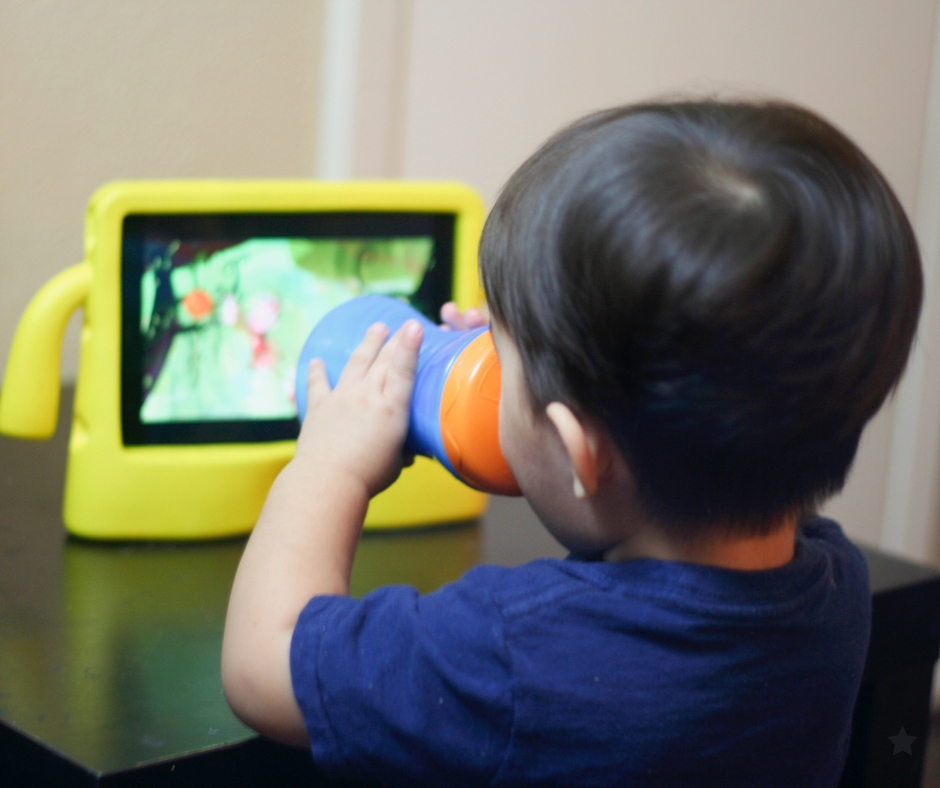
According to researchers at Drexel University College of Medicine, children exposed to greater TV viewing by their second birthday were more likely to develop atypical sensory processing behaviors, such as "sensation seeking" and "sensation avoiding," as well as "low registration" by 33 months of age. The team pulled 2011-2014 data on television or DVD-watching by babies and toddlers at 12- 18- and 24-months from 1,471 children from the National Children's Study. At 12 months, any screen exposure compared to no screen viewing was associated with a 105% greater likelihood of exhibiting "high" sensory behaviors instead of "typical" sensory behaviors related to low registration at 33 months. Click below to learn more about this study and findings.
Did you know that KAIMH has a Race and Social Justice Committee? Formed in 2019 under the visionary leadership of Dr. Amittia Parker, the committee emerged from a shared recognition that our work in infant and early childhood mental health must be deeply rooted in racial equity and social justice. Our mission is “to identify, analyze, elevate, and convene around problems, injustices, and opportunities related to racial and social justice in infant and early childhood mental health.”
We are a collaborative community of social justice advocates who advise the KAIMH Board of Directors and other committees. The Diversity-Informed Tenets for Work with Infants, Children, and Families guide everything we do, as we strive to strategically center racial and social justice across all aspects of KAIMH’s mission.
I still remember the 2019 KAIMH conference when Dr. Parker first proposed forming this committee. It wasn’t yet an official option on the sign-up sheet, so I scribbled “Race and Social Justice Committee” and my email on a scrap of paper—and turned it in. Years later, we are still meeting regularly, continuing the work of naming, examining, and interrupting racial oppression in infant mental health.
What Have We Been Working On? ● Establishing our committee’s mission and responsibilities
● Providing education and reflection opportunities for the KAIMH Board at each meeting such as elevating the importance of gaining multiple perspectives
● Creating spaces to support one another’s personal and professional justice work
● Developing a Social Justice Learning Agenda to guide KAIMH training and professional development
What’s next? Stay connected right here in this newsletter! We’ll be sharing resources, events, reflections, and discussion prompts designed to help our community challenge internalized and systemic whiteness and recenter justice in our collective work. Together, we are growing a KAIMH community where every baby, family, and professional is supported by systems rooted in equity, belonging, and justice. If you are interested in learning more about the committee or joining in the work, let us know by filling out this brief form.
Suzy Green, LMSW, IMH-E
Playdough and Social Emotional Development
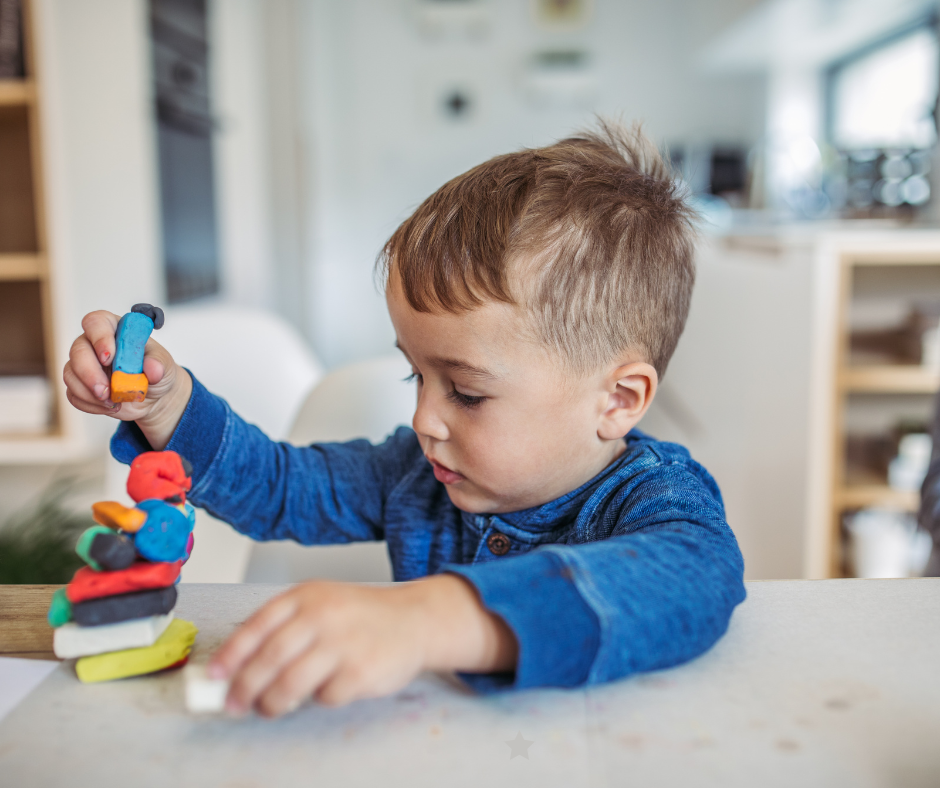
Sensory play directly influences how children feel, process emotions, and regulate their behavior. Playing with dough by doing repetitive motions of squeezing, rolling, and pounding activate pressure points in the hands, which has a naturally soothing and grounding effect on the nervous system. Some children respond well to having a “heavy work” outlet that happens while pushing and pulling the dough. This can reduce stress hormones and release frustration in an appropriate manner. Playdough offers a healthy distraction, giving children a moment to step back from an overstimulating situation to refocus their attention and allowing them time to de-escalate. Playing with playdough alongside peers or caregivers also provides opportunities to practice essential social competencies such as cooperation and sharing and back and forth conversations. And the process of creating with playdough can boost a child's sense of competence, leading to increased self-esteem ("Look what I made!").
For more ideas on indoor sensory games and activities for little ones, check out:
December-January Professional Development
Check out these upcoming professional development opportunities that support your Infant Mental Health Endorsement® from the Early Childhood Investigations Webinars, Kansas Child Care Training Opportunities, Kansas LEND, Kansas Children's Service League, and Child Care Aware network.




.png)