If you're having trouble viewing this email, you cansee it online.
KAIMH Connections
Resources for Early Childhood Mental Health Advocates
Updates | November 2025
Read below for updates on Endorsement renewal, the connection between parental leave and breastfeeding, upcoming coursework, the Supporting Care Providers program and more!
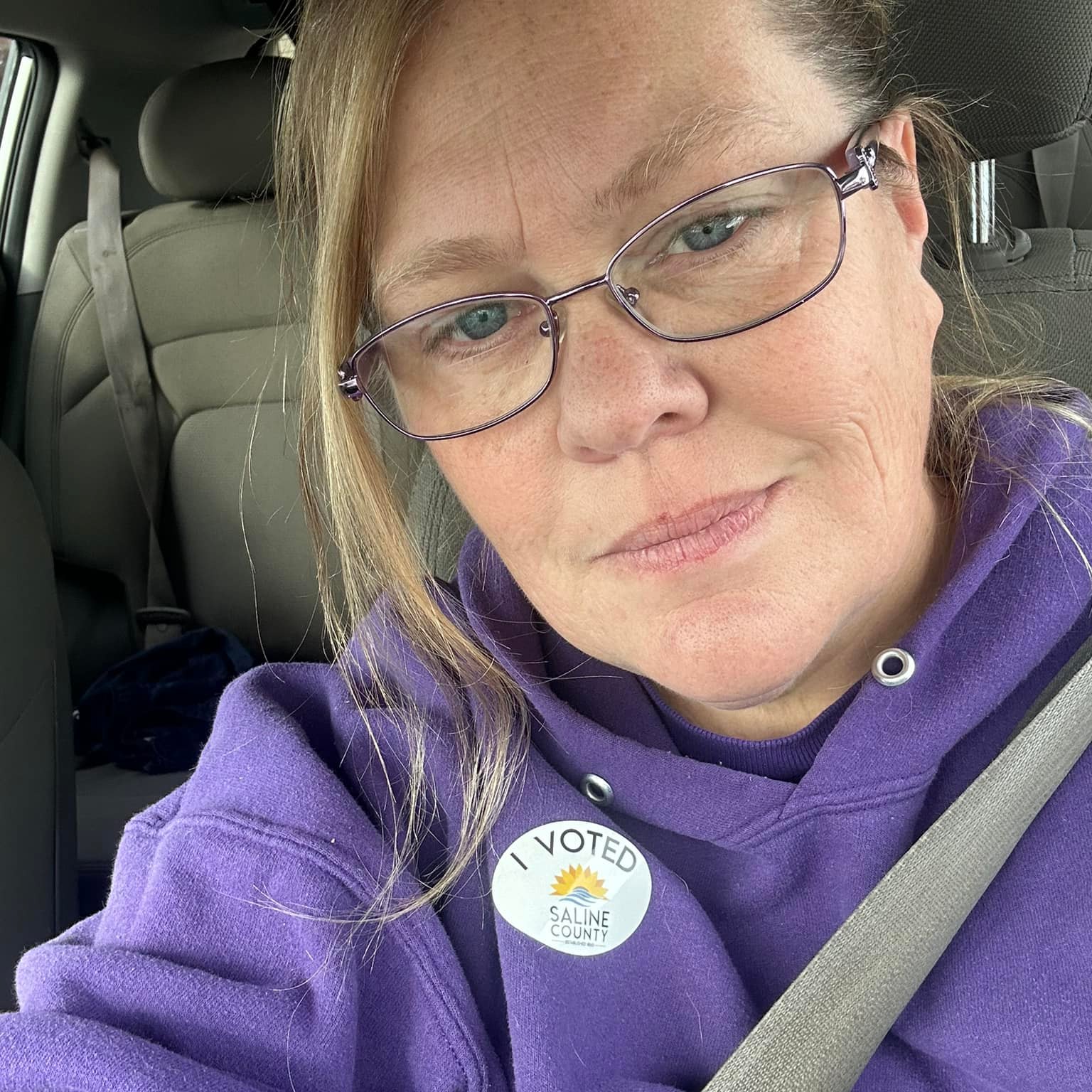
Congratulations to Our Newest Endorsees!
Ticia Brandenburg, IECMH-E®
Ticia says, "Having both my Infant Mental Health Endorsement and The Early Childhood Family Associate Endorsement. Shows my families and potential families that I am committed to children of all ages and making sure to provide an environment that is developmentally appropriate and supports the children with all their needs physically and emotionally. Having these endorsements enhances the resources available to me and a way to promote children’s wellbeing within and outside of my program."
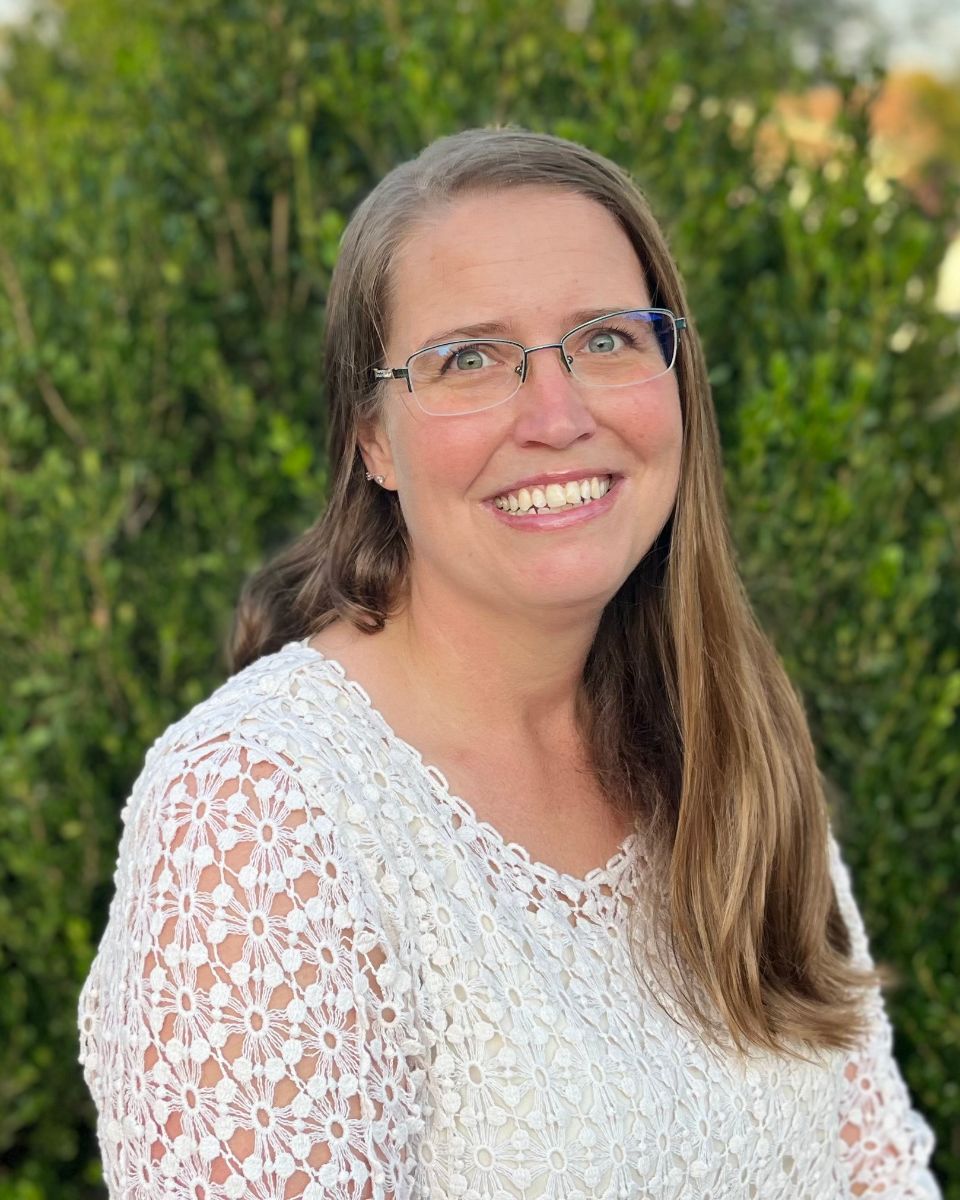
Heather Naegele, ECMH-E®
Heather says, “Earning the Early Childhood Family Associate endorsement was an important goal for me because I truly value the power of positive early relationships and the strong foundation they create for lifelong mental and physical well-being. Having experienced my own journey with mental health and neurodiversity, I am deeply committed to supporting children and families in developing the social-emotional skills they need for communication, self-regulation, and healthy connections. I strive to create an inclusive, safe, and nurturing environment where every child can thrive through positive relationships. I also recognize the importance of seeking support when needed, so I can continue to grow and best serve the children and families around me.”
Jenny Wright, IECMH-E®
Jenny says, " As an Infant Toddler Professional Development Specialist with KCCTO, pursuing additional KAIMH Endorsement has been both helpful professionally and personally. Reflective practice helps me stay grounded and intentional, while the parallel process reminds me to model the same trust, empathy, and emotional safety I hope others extend to children and families. I am passionate about fostering environments where both adults and children feel seen, valued, and safe to grow."
Breastfeeding and Parental Leave Connection
The United States is the only high-income country in the world that doesn’t have a federal mandate for paid maternity leave but the International World Health Organization recommends breastfeeding exclusively for the first six months and to continue for two years. Although this has been endorsed by the American Academy of Pediatrics the issue is that half of the women who choose to breastfeed, cannot breastfeed for as long as they want due to major structural barriers.
In the “Make Our Children Healthy Again Strategy” released September 2025 it supports breastfeeding to address childhood chronic disease. This involves two federal agencies — the Departments of Agriculture and Health and Human Services — will work to increase breastfeeding rates through the Special Supplemental Nutrition Program for Women, Infants, and Children (WIC) and “other policies” that support breastfeeding parents. However the MAHA report does not reference support for a federal paid parental leave program. To read more about this click the button below.
As the child care licensing regulations have changed so has the opportunity for more family, friend and neighbor (FFN) care expansion in Kansas. Family, Friend and Neighbor care is unlicensed child care that families use in place of formal child care programs. These care providers play a crucial role in supporting families and their young children's growth and development - particularly those with limited access to more formal care options. In Johnson and Wyandotte counties this has been supported through the Suporting Care Providers of Kansas program since 2006. Similar to the Parents As Teachers home visitation program, care providers receive monthly personalized visits to support caregivers on developmentally aligned practices, developmental screenings and and access to resources, such as books and activity materials. To learn more about this program and/or see about the possibility of expanding this service to your community, read below.
Important Update: Endorsement Renewal Process Is Changing
We want to inform you that Endorsement Renewal will look different moving forward. While the requirements remain the same, the process itself has changed in accordance with the Alliance for the Advancement of Infant and Early Childhood Mental Health policy.
What’s Changing?
Endorsement Renewal will now be completed via attestation every three years.
The next renewal period will be December 31, 2027.
At that time, your EASy application will prompt you to:
Attest that you have met the yearly requirements for your Endorsement category.
Pay the renewal fee (this will be invoiced via QuickBooks if you have not paid via neonone, EASy will not have a place to enter payment).
Once the attestation window closes, a percentage of applications will be randomly selected for audit, at which point applicants will be required to submit documentation of trainings.
What This Means for You:
You may continue updating your trainings in your EASy application yearly, but this is not required for the attestation process.
Because this is now a three-year renewal cycle, you will need to complete a total of 45 training hours (15 per year) for the attestation period.
If you have not been Endorsed for the full three years by the attestation date, your requirements will be pro-rated.
Your renewal requirements will always be visible at the top of your Training or Reflective Supervision tab in EASy.
Fee Options: You have two options for paying your Endorsement renewal fee: 1. Spread the cost over three years: Pay $75.00 annually ($40.00 for KAIMH membership + $35.00 toward Endorsement renewal). 2. Pay in full at attestation: Pay the $105 Endorsement renewal fee in one lump sum on or before December 31, 2027.
Video Tutorial: Check out this video for an example of what the attestation process will look like.
Don't Forget Your KAIMH Membership: KAIMH Membership continues to renew annually. Memberships expire Dec 31 of each year. Renew your membership here: www.kaimh.org/membership
Fee Updates: Fee Prices will be updated in accordance to guidance from the Alliance for the Advancement of Infant and Early Childhood Mental Health. The overall total cost of Endorsement has not changed!
Family Associate
Family Specialist
Mental Health Specialist
Mental Health Mentor
Endorsed Reflective Supervisor
Registration Fee
25.00
25.00
25.00
25.00
25.00
Processing Fee
25.00
$50.00
250.00
300.00
15.00
Annual Renewal
35.00
35.00
35.00
35.00
35.00
Membership
40.00
40.00
40.00
40.00
NA
t here
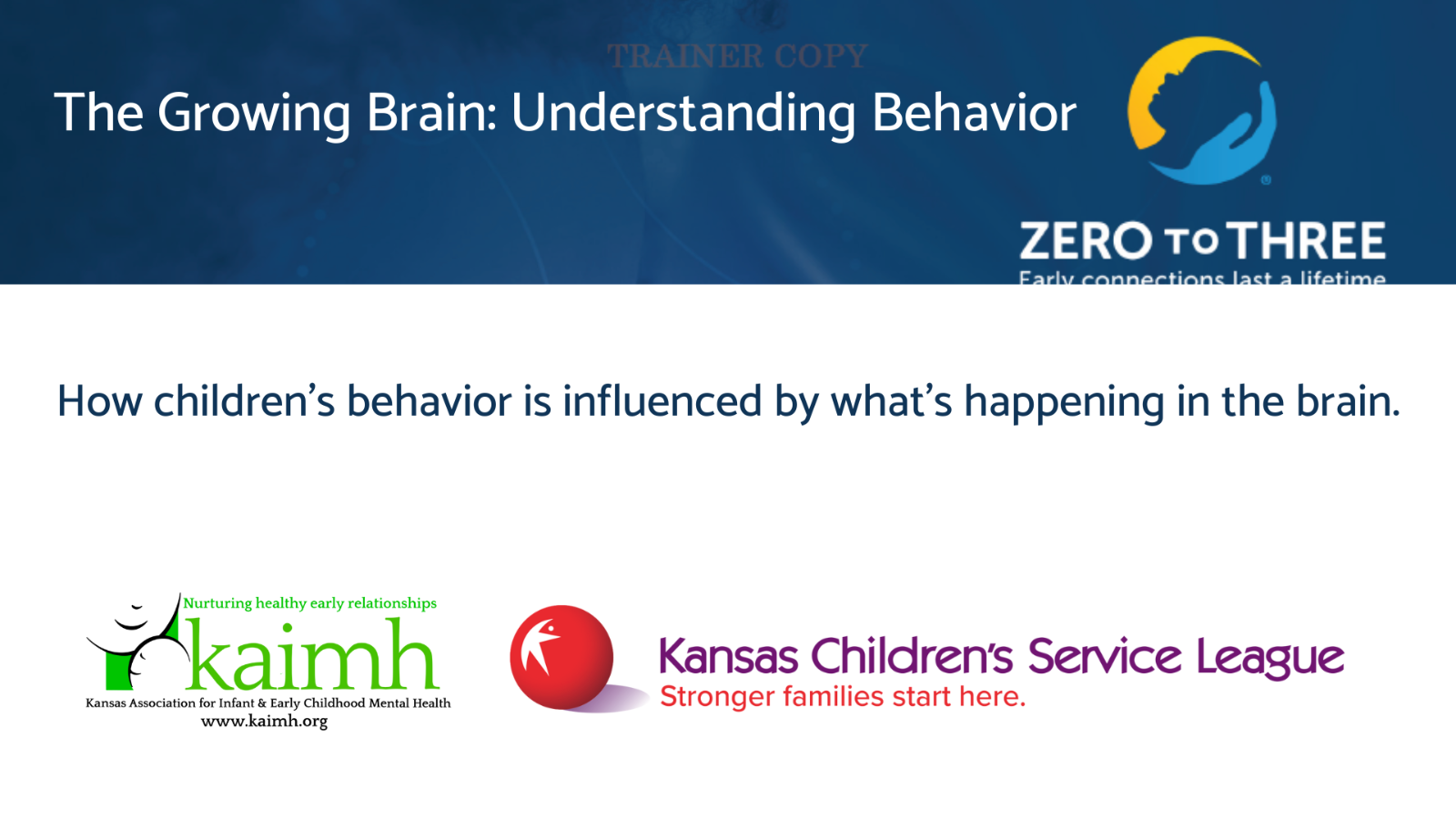
The Growing Brain - Wichita
Join KAIMH on Saturday, November 22, 2025 from 8:45 am to 12:00 pm for this FREE class as we learn about brain anatomy and the connection to behavior, root causes of challenging behavior, and effective strategies for responding to challenging behavior. This course is KDHE approved for 3 hours. Participants will receive Zero to Three manuals and learning materials that support children's healthy brain development. Click the button below to register. For questions, please contact Marie Treichel at marie@kaimh.org.
Check out these upcoming professional development opportunities that support your Infant Mental Health Endorsement® from the Early Childhood Investigations Webinars, Kansas Child Care Training Opportunities, Kansas LEND, Kansas Children's Service League, and Child Care Aware network.